Introduction
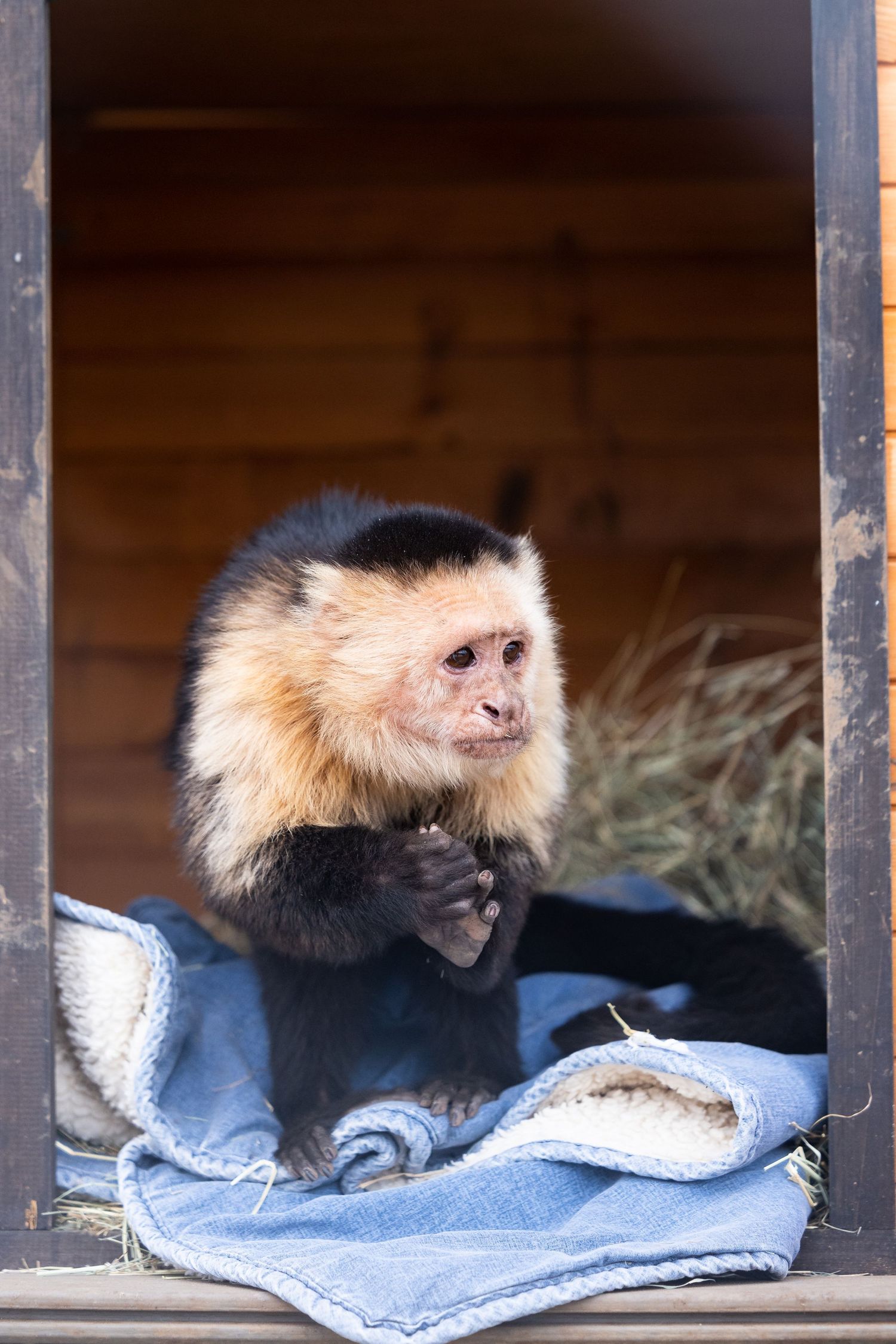
A young capuchin — referred to here as Theo — entered permanent sanctuary placement early this year. For ethical and privacy reasons, details of his background remain undisclosed.
Theo’s arrival provided an important opportunity to document how capuchins adjust to long-term sanctuary living, especially when prior social or cognitive stimulation history is unknown.
This study focuses solely on behavioral change across his first three months.
Month 1 — Environmental Orientation
Theo initially displayed hesitancy in navigating his new space — common when primates encounter unfamiliar environments. He spent time in elevated corners, observing quietly.
Recorded Behavior
Quiet vocalizations (soft trills)
Short exploratory bursts
Minimal engagement with puzzle feeders
Food acceptance consistent and calm
He demonstrated interest in other capuchins housed nearby, spending several minutes each day watching them and emitting affiliative sounds through mesh.
By the end of Month One, Theo began experimenting with simple enrichment objects, moving them cautiously and retrieving food items inside.
Month 2 — Cognitive Stimulation & Growing Social Expression
Month Two marked noticeable advancement in exploratory confidence.
Theo began using ropes, platforms, and puzzle boxes more frequently.
Behavioral Developments
Tool curiosity (using objects to access food)
Regular branch travel between resting sites
Deliberate manipulation of enrichment items
He also initiated grooming behaviors with neighboring individuals through mesh — an essential capuchin social behavior signifying affiliation. Food sharing gestures were also recorded, with Theo offering pieces of fruit through the barrier.
His vocal repertoire diversified, especially during staff arrival or food distribution — interpreted as positive anticipation rather than dependency.
Month 3 — Structured Social Integration & Identity Formation
Theo was introduced to a small social group under controlled conditions. His first behavior was submissive posturing — lowered body height and soft vocalizations. These signals were received calmly, and mutual grooming followed within minutes.
Over several sessions, Theo demonstrated:
Play invitations
Object sharing
Cooperative food searching
He also began sleeping in elevated branch structures, mirroring wild-typical nest choice.
These behaviors indicate strong social plasticity and identity stabilization within his species culture.
Conclusion
Theo’s development demonstrates the capacity for primates to adapt fluidly into socially and cognitively rich environments when given time and agency.
Notable progress:
Enrichment engagement increased dramatically
Tool curiosity emerged naturally
Affiliative grooming and play developed
Elevated resting and exploratory behavior stabilized
Theo’s permanent residency allows ongoing study of:
Social learning
Cognition
Emotional expression
Group role evolution
This three-month period reflects only the beginning of his behavioral unfolding.